
Okara: No-Waste Japanese Soy Pulp Fritters with Ponzu
- Eiten

- Nov 14, 2025
- 2 min read
Walk into any tofu shop in Japan and you'll see okara. It is the fiber-rich pulp left after making soymilk. Sometimes it's free; other times there's a nominal charge. You can also find it at the supermarket in the cold case somewhere in the produce section, which is what I do. Even there, it is less than $1 USD for one pound.
In the West, most producers throw it away because there's no market demand. This is textbook mottainai: wasting the inherent potential of a resource simply because we don't know what to do with it, or the public has been given any resources to figure that out. Until now. I am supplying the resource: my recipe for Okara Fritters.

Okara is nutritionally dense. One cup of the raw pulp delivers roughly 4.5 grams of protein, 3.5 grams of fiber, and significant amounts of calcium, iron, and B vitamins. Compare that to the cost—free to pennies per ounce—and you're looking at one of the most economical protein sources available. The fiber content alone makes it valuable for digestive health and sustained energy. Yet most people have never heard of it, much less cooked with it.
In shōjin ryōri, decisions are made based upon what tastes good or what we feel like eating. We consider the full context: where food comes from, what happens to byproducts, whether we're using resources with respect and awareness. Okara represents the complete soybean—what remains after we've extracted the creamy liquid for tofu or soymilk. To discard it is to ignore half the bean's potential. The waste isn't simply the physical resource either. It extends to our bank accounts.
The economic argument is equally compelling. When I lived in Oakland, I'd pick up fresh okara from Tokyo Fish Market in Berkeley for free. They were happy someone wanted it. Even in areas where you have to purchase it from Asian grocers, you're paying $1-2 per pound for a complete protein that stretches across multiple meals. For anyone facing budget constraints—or anyone simply interested in cooking economically—okara should be a pantry staple.
This recipe transforms okara into crispy fritters with a tender interior, served with the perfect counterpoints: ponzu sauce and fresh grated daikon. The technique is straightforward: season the okara with a few basic ingredients, bind the mixture with rice flour, form into patties, and pan-fry until golden brown and crispy. The ponzu and daikon cut through the richness of the fried exterior while the okara itself delivers a subtle, earthy sweetness. Total active time is less than 25 minutes. The result is a complete dish that costs less than a dollar to make.
These fritters work as a side dish alongside rice and miso soup, as a protein element in a larger meal, or as a standalone snack. They hold well for a day or two refrigerated and reheat quickly in the oven. Depending on how much okara you have on hand, this recipe scales easily.
This is the practical application of mottainai: taking what others discard, recognizing its value, and preparing it with the same care you'd give any ingredient. The fritters aren't elaborate or time-intensive. They simply ask you to see potential where most see waste.
1
Storage
The fritters will store for up to 3 days in the refrigerator. To reheat, simply add them to a pre-heated oven (about 150°C/300°F) for 7 or 8 minutes. If you have more okara on hand to make a larger batch, you can also freeze the mixture in bulk and defrost as needed.
2
Alternate Ways to Serve
This fritter is shaped like a hamburger. Follow your instincts and put them on buns with some lettuce, tomato, onion, and whatever condiments you like as a protein rich alternative to the typical veggie burger recipes out there.
Notes


1
PREPARING THE INGREDIENTS. Finely chop the carrots, shiitake mushrooms, and burdock root. Thinly slice the green onions.
2
MAKING THE MIX. Add the okara to a bowl and pour in the water. Mix until it forms a soft "dough." Add the vegetables and soy sauce, then stir until homogeneous. Finally add the two flours and mix just enough to bind everything together. The total weight of the mixture will be 400 grams.
3
FRYING THE FRITTERS. Add the oil to a pan and place it over medium-high heat. When the oil is hot, form the mix into 100 gram fritters (shape them like hamburger patties) and carefully add them to the oil, releasing them away from you to avoid splashing hot oil onto your hands. When the fritters are golden brown around the edges, use a spatula to turn them over and fry on the other side. As the fritters are ready, remove them from the pan and drain them on a plate or tray lined with a clean kitchen towel while the remaining fritters finish cooking.
4
HOW TO SERVE. Cut the fritters in half and arrange the halves onto serving plates. Grate some fresh daikon radish, squeeze out some of the moisture, and arrange a small pile onto each plate. Serve with ponzu sauce. You can also sprinkle a bit of shichimi togarashi (Japanese seven-spice chili powder) like I did if you have it or cayenne if you can't find shichimi. The hot spice—like the daikon and ponzu—is a great balance to the richness of fried foods in general.
Instructions
160 grams Okara (Soy pulp)
100 grams Water
45 grams Carrot
20 grams Shiitake
10 grams Green onions
5 grams Burdock root
30 grams Soy sauce
30 grams AP Flour
15 grams Rice flour
45 grams Vegetable oil
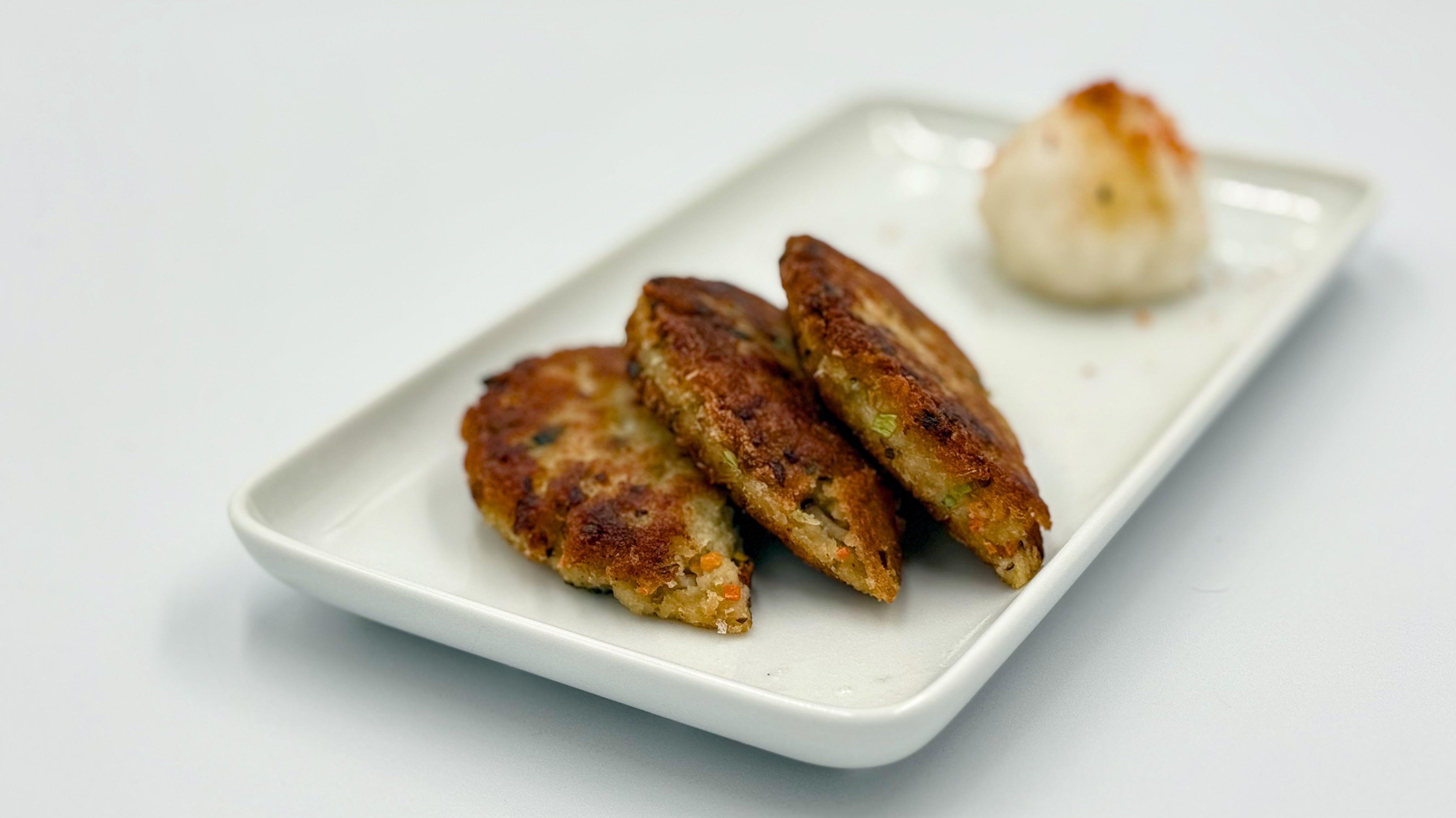
Okara: No-Waste Soy Fritters with Ponzu
Eiten

Servings :
2
Calories:
110
Prep Time
15 min
Active Cook Time
5 min
Passive Cook Time
0 min
Total Time
20 min


Comments