
Japanese Plant-Based Karaage
- Eiten

- Nov 11, 2025
- 4 min read
Daizu Mēto no Karaage・大豆ミートの唐揚げ
Karaage represents one of Japan's most beloved comfort foods—crispy fried chicken found everywhere from convenience stores to izakayas. It's also what I knew I would miss most as I started my transition to a plant-based diet just over a year ago.
Knowing this, I set a challenge for myself: make non-meat versions of my favorite foods that rival—if not beat—the original. This plant-based adaptation delivers. From the signature crunchy exterior to the juicy interior, it checks all of the boxes.
While traditional karaage uses chicken thigh meat, this plant-based adaptation proves that authentic Japanese fried food technique transcends the protein source. The key lies in understanding the fundamental principles: proper marination, strategically light coating, and controlled frying temperature.
This recipe focuses on all three elements to produce a karaage that is so good it would fool even the most skeptical carnivore palates.

Rice Flour: The Secret to Crispy Plant-Based Karaage
Rice flour creates a lighter, crunchier coating than wheat flour or cornstarch alone. The science is straightforward: rice flour contains less gluten than wheat flour and absorbs less oil during frying. This produces a coating that stays crispy longer after cooking—essential for karaage served at room temperature, as is common in Japanese bento boxes.
The starch structure in rice flour gelatinizes at higher temperatures, forming a rigid crystalline network when it cools. This creates the distinctive shattering crunch associated with quality karaage. Additionally, rice flour's neutral flavor allows the marinade's aromatics—ginger, garlic, and soy sauce—to remain prominent rather than competing with a wheaty taste.
For best results, use regular rice flour rather than sweet (mochiko) rice flour. The former produces a crisper texture, while the latter creates excessive chewiness unsuitable for karaage.
Rice Oil: Clean Healthy Frying
Rice bran oil (kome abura) is the preferred frying medium in Japanese kitchens for good reason. Its high smoke point (450°F/232°C) allows for the 350-375°F frying temperature karaage requires without breaking down or producing off-flavors. This stability means the oil maintains consistent frying performance across multiple batches.
Textural Benefits:
Rice oil's composition—primarily monounsaturated and polyunsaturated fats—creates a lighter coating that doesn't feel greasy. The oil's viscosity allows it to drain cleanly from fried foods, preventing that heavy, oil-logged texture common with lower-quality frying oils.
Nutritional Properties:
Rice bran oil contains gamma-oryzanol, a compound unique to rice that research suggests supports cardiovascular health. The oil also provides vitamin E (tocopherols and tocotrienols) and phytosterols that may help manage cholesterol levels. While frying is inherently indulgent, choosing rice oil means you're working with one of the more beneficial frying mediums available.
Practical Note:
If rice oil proves difficult to source or exceeds your budget, neutral vegetable oils with high smoke points (grapeseed, sunflower, or refined avocado oil) work adequately, though they won't deliver quite the same clean finish.
Soy Protein: Choose Wisely
Textured soy protein (often called TVP—textured vegetable protein) comes in three primary forms, each suited to different applications. Selecting the right type determines whether your karaage succeeds or disappoints.
1. Sliced Soy Protein
Thin, flat pieces (approximately 1/4" thick) that rehydrate into tender, bite-sized portions. These slices absorb marinade efficiently while maintaining structural integrity during frying. I am reminded of chicken tenders, but this is a karaage recipe. Use these if the block/chunck type is unavailable. Otherwise keep reading.
2. Block/Chunk Soy Protein ☆
Larger, irregular pieces (approximately 1/2") with a denser, meatier texture. This is ideal for karaage, and it is what I use for this recipe. The texture is similar to chicken breast. Thigh meat is typically used for karaage, and it is a bit more tender than breast meat, but the magic happens when you form the karaage: each piece of the plant-based karaage is made up of several smaller chunks, creating a fall-apart tenderness as a result. The batter in between the pieces takes on a slight bit of the oil from frying giving it that rich, succulent juicy burst just like the real thing
3. Ground/Granulated Soy Protein
Small granules (similar to uncooked couscous) that rehydrate into a crumbly texture. These are unsuitable for karaage, lacking the structural integrity needed for frying and the proper pull-apart texture key to the fried chicken experience. Save these for applications like plant-based Bolognese sauce or taco filling.
The Origins of Karaage: From China to Convenience Stores
Karaage's history reflects Japan's long tradition of adapting foreign cooking techniques into distinctly Japanese forms. The word "karaage" (唐揚げ) literally means "Tang-fry"—a reference to China's Tang Dynasty (618-907 CE), indicating the technique's Chinese origins. The method likely arrived in Japan during periods of intense cultural exchange, though it didn't achieve widespread popularity until the 20th century.
Early Japanese fried foods typically used a light coating or none at all, influenced by tempura's Portuguese-introduced technique. Karaage as we know it—with its distinctive soy-ginger marinade and light starch coating—developed during Japan's post-war period when Western influence combined with traditional Japanese flavors created new comfort foods.
The preparation gained mass popularity in the 1970s when convenience stores began selling pre-made karaage. This positioned it as affordable, accessible comfort food rather than restaurant fare. Today, karaage appears everywhere: convenience stores, supermarket deli sections, izakaya menus, specialty karaage shops, and home kitchens across Japan.
Buddhist Perspective:
Traditional Buddhist temple cuisine avoided frying for the most part. This is likely due to practical budgetary limitations: cooking fuel and the excessive amount of oil needed relative to the consumable food produced increase costs significantly. That said, it is not unusual to come across fried foods when enjoying a seasonal shōjin ryōri meal at temples throughout Japan. While training on Mt. Hiei it wasn't unusual to have a piece of vegetable tempura from time to time.
This vegan adaptation of karaage particularly aligns with the Buddhist values of compassion and non-violence (ahimsa). It also introduces the concept of modoki (もどき), loosely translated as an "imitation/mock" of something. The aforementioned values prohibited the consumption of various foods, in particular foods derived from living creatures. The monks created many dishes that acknowledged the desire to indulge in these things, while adhering without compromise to their vows.
Now, let's make karaage and indulge ourselves . . .
1
Adjusting the Batter
Once you've made this a few times you will develop an eye for the proper consistency of the karaage batter. It will almost always need some adjustment in one direction or the other. If your karaage seems too wet, add a bit more rice flour. If it seems too dry, add a splash of water or sake to moisten it.
Notes


1
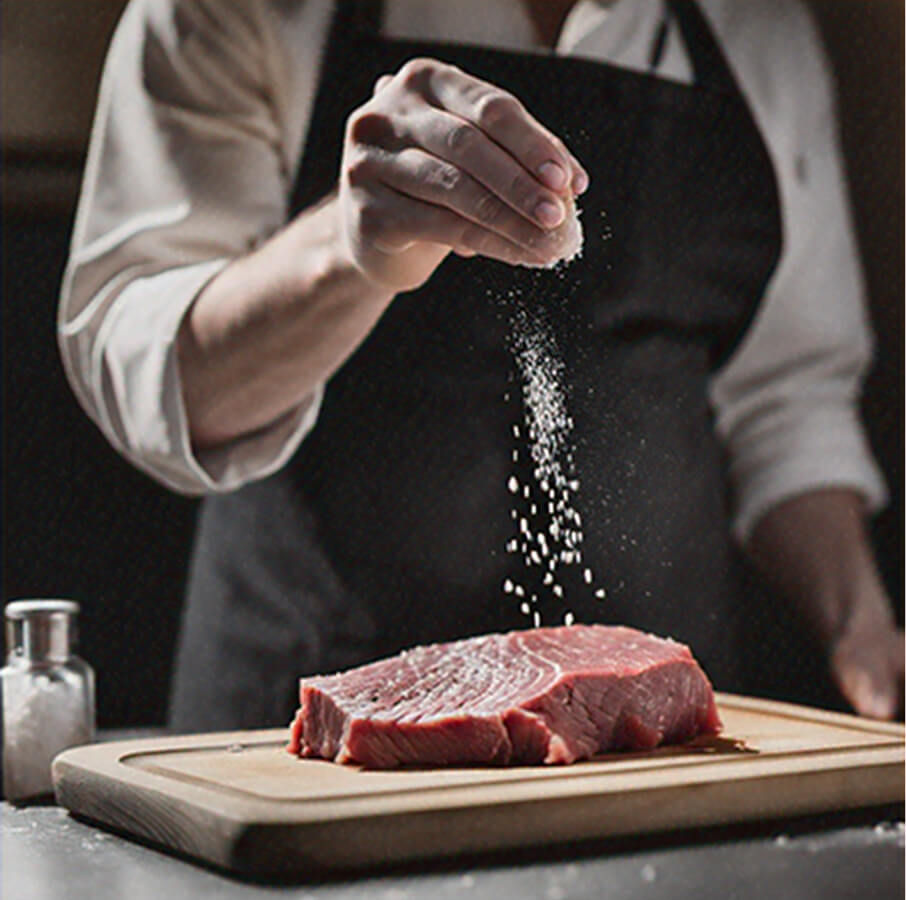
PREPARING THE PROTEIN. Bring a pot of water to a boil over high heat. Add the soy protein, and return to a boil. Once the water returns to a boil, turn off the heat and place a drop lid into the pot to keep the protein completely submerged. Rehydrate for 5 minutes. Strain off the water, and allow the protein to cool down a bit. Use your hands to gently wring out excess moisture, and set the protein aside.
2
MARINATING THE PROTEIN. Grate the ginger and garlic or finely chop it with a knife. Combine the protein, ginger, garlic, sake, and soy sauce in a bowl and mix well to that they seasonings are evenly distributed. Marinated for 30 minutes, or up to an hour.
3
FORMING THE KARAAGE. When the protein is finished marinating, add the rice flour and mix with a spoon just until the mix comes together. The karaage should be coated in a light "batter" and the pieces should stick together easily.
4
FRYING THE KARAAGE. Prepare a small plate or bowl with some rice flour to coat the karaage just before frying. Add the oil to a pot that will hold all of the karaage in one even layer and set it over medium-high heat. When the oil is hot, use your hands to form the karaage into two-bit pieces (30 grams), coat it lightly in the rice flour, and carefully adding each piece to the oil. Once all of the pieces have been added, start flipping the pieces so that they cook on all sides. The pieces are ready to flip when they appear lightly golden around the edges. Once the pieces are fully cooked, remove them to a tray or plate lined with a kitchen towel to drain off excess oil while the rest of the pieces finish cooking.
5
HOW TO SERVE. Divide the pieces equally onto serving dishes. There should be 3-4 pieces per serving. Season with a small amount of sea salt and garnish with a slice of citrus. I used sudachi because it was on sale at the store and I like to grate the skin onto the karaage, but lemon is the go-to most times that I make this.
Instructions
90 grams Soy protein (block type)
1000 grams Water
45 grams Sake
35 grams Soy sauce
10 grams Ginger
5 grams Garlic
For the Marinade
60 grams Rice flour
45 grams Rice oil
For Frying
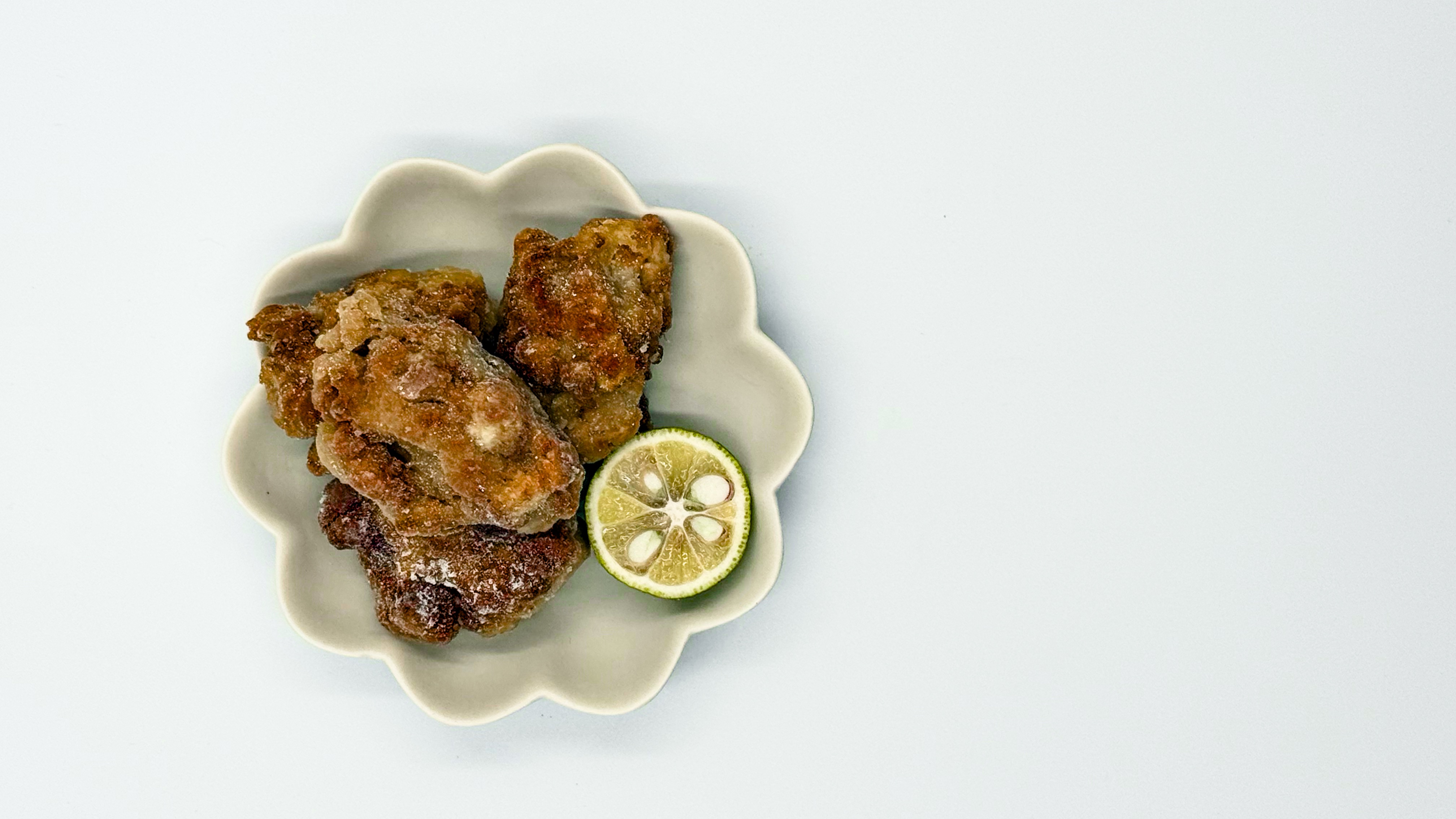
Japanese Plant-Based Karaage・大豆ミートの唐揚げ
Eiten

One of the best things about this recipe is the minimal use of oil. The deep frying effect is achieved by crowding the pieces together in the pan—being careful that they don't touch or they will stick together—and using the smallest pan possible. This causes the oil to rise up from displacement and "deep" fry the karaage.
Servings :
4
Calories:
150
Prep Time
20 min
Active Cook Time
10 min
Passive Cook Time
30 min
Total Time
60 min


Comments