
Kirboshi Daikon & Wakame Sunomono: A Traditional Japanese Vinegared Salad
- Eiten

- Oct 21, 2025
- 2 min read
Kiriboshi Daikon to Wakame no Sunomono
切り干し大根とわかめの酢の物
The practice of dressing and preserving foods with vinegar, such as this daikon & wakame sunomono, has been a staple of Japanese cuisine since the Nara period (710-794 CE), when Buddhist monks brought vegetarian cooking practices from China and adapted them to Japanese ingredients and sensibilities. Sunomono served multiple purposes: the vinegar acted as a natural preservative before refrigeration and the refreshing acidity balanced heavier dishes. The name—in fact—evolved over time. Originally such dishes were referred to as hashi-yasume (箸休め), or "chopstick vacations," which was a nod to their role as a palate cleanser between richer courses. As part of the ichiju issai format they continue to play a similar role, serving as a counterpoint to the sweetness of steamed rice and the saltiness of miso shiru.

Health Benefits of Daikon & Wakame
Daikon(大根)
Whether fresh or dried, daikon radish offers impressive nutritional benefits that align perfectly with the holistic approach to health central to Buddhist food philosophy and shōjin ryōri in particular.
Digestive Support: Daikon contains enzymes that aid in the digestion of starches and fats, which is why it traditionally accompanies heavier dishes. In temple cuisine, this digestive aid was particularly valued given the carbohydrate-rich diet of rice and noodles.
Rich in Vitamin C: Even after drying, kiriboshi daikon retains significant vitamin C, supporting immune function—particularly important during winter months when fresh produce was historically scarce.
High Fiber Content: The drying process concentrates dietary fiber, promoting healthy digestion and satiety. This makes sunomono an excellent side dish for those transitioning to plant-based eating who worry about feeling satisfied.
Low Calorie, Nutrient Dense: Dried daikon provides substantial nutrition and texture with minimal calories, making it ideal for those focused on health and wellness without calorie restriction.
Minerals: Kiriboshi daikon is a good source of calcium, iron, and potassium—minerals that those reducing animal products often need to source intentionally from plant foods.
Wakame (若布)
The seaweed used in this sunomono, has been harvested along Japan's coastlines for over 1,000 years and features prominently in temple cuisine as one of the most nutritious foods available to monks. In addition, it is emblematic of the practices of compassion and non-violence.
Iodine for Thyroid Health: Wakame is one of the best plant-based sources of iodine, essential for thyroid function—a nutrient sometimes lacking in plant-based diets.
Omega-3 Fatty Acids: Unlike most plant foods, wakame contains EPA omega-3 fatty acids (though in smaller amounts than fish), making it valuable for those eliminating seafood.
Fucoxanthin: This unique antioxidant found in brown seaweeds like wakame has been studied for metabolic health benefits and may support healthy weight management.
Minerals from the Sea: Wakame provides magnesium, calcium, and iron in forms that are often more bioavailable than land vegetables.
1
Storage
Sunomono will keep in the refrigerator for 3-5 days.
2
Substitutions
This version can be enjoyed any time throughout the year. In the summer—when cucumbers are abundant—the classic preparation of cucumber and wakame is a great option. Try different combinations of whatever you have on-hand. There is no "wrong" comination: what is in season and your imagination are the only limitations.
3
WFPB Diet Variation
Simply eliminate the sugar and soy sauce for an easy whole food plant-base version.
Notes



1
Rehydrate the dry ingredients. Combine the kiriboshi daikon and wakame in a bowl and cover with water. Rehydrate for 10 minutes. Strain the ingredients and squeeze them between your hands to remove excess moisture. You want to get them as dry as possible so that they absorb the marinade.
2
Make the marinade. Combine the vinegar, sugar, sea salt, and soy sauce in a small bowl and whisk together until the salt and sugar are fully dissolved.
3
Marinating the salad ingredients. Pour the marinade over the rehydrated ingredients and toss until they are evenly dressed. Set aside at room temperature for an hour before serving. If you are not planning to eat this immediately, place it into the refrigerator to marinate. The cold temperature slows down the marination process, so be sure to increase the marination time to accommodate for this.
Instructions
24 grams Kiriboshi daikon
8 grams Dried wakame
500 grams Water
60 grams Rice wine vinegar
30 grams Sugar
7 grams Sea salt
2 grams Soy sauce
For the Marinade
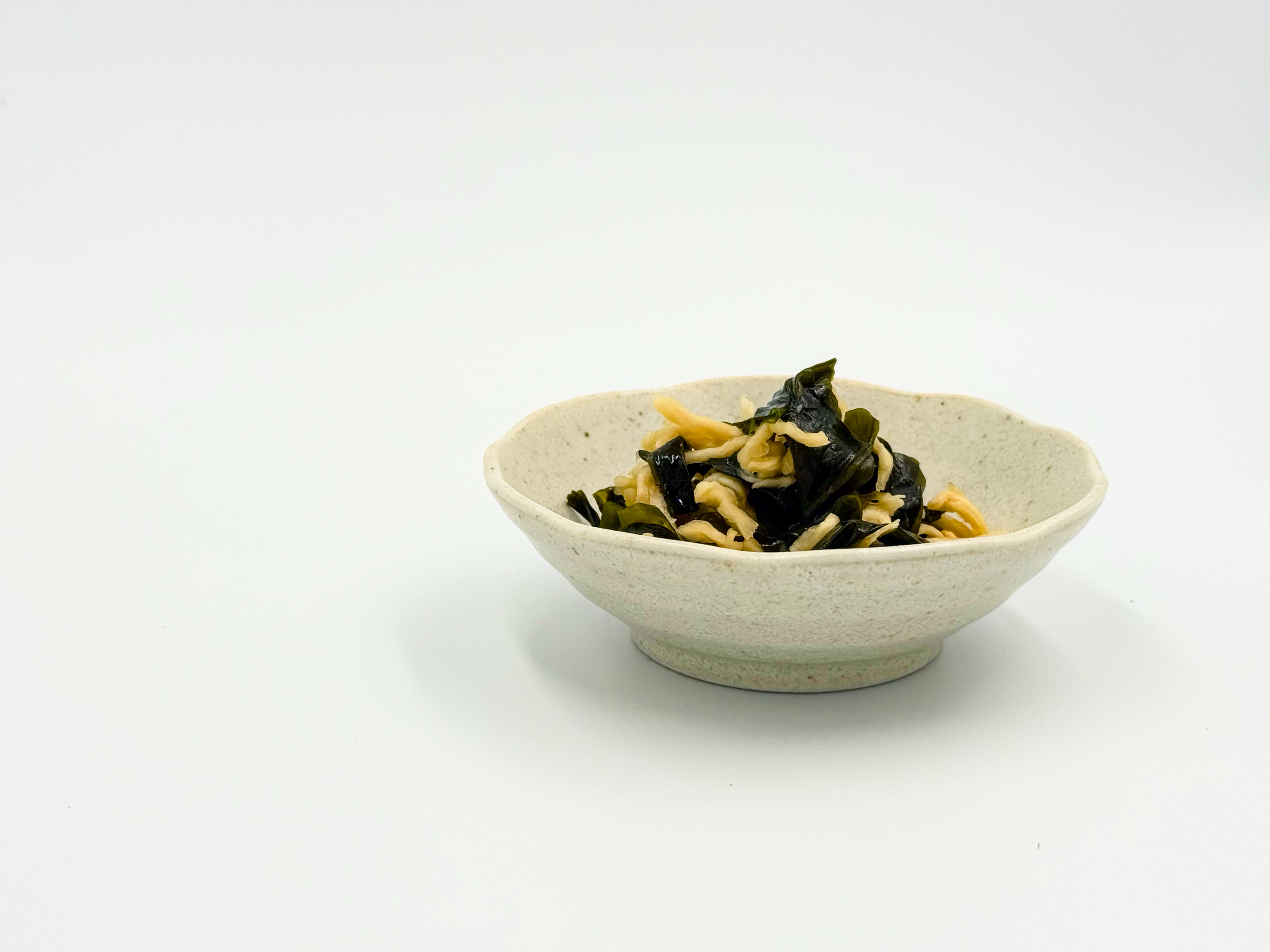
Kiriboshi Daikon & Wakame Sunomono
Eiten

A refreshing Japanese vinegared salad featuring dried daikon radish and wakame seaweed. This traditional sunomono embodies shōjin ryōri principles of no-waste (mottainai) and full ingredient utilization (ichibutsu zentai), transforming affordable pantry staples into a flavorful side dish in minutes. The marinade technique works just as well with cucumber (the most widely known variation), cabbage, or other vegetables, making this an endlessly adaptable template for mindful, plant-based cooking. If you are adhering to a strict WFPB diet, you can simply eliminate the sugar and the recipe is wonderful all the same.
Servings :
4 x 45 grams
Calories:
20
Prep Time
15 min
Active Cook Time
0 min
Passive Cook Time
1 hr
Total Time
1 hr 15 min


Comments