
Marinated Bok Choy & Abura Age Ohitashi
- Eiten

- Oct 31, 2025
- 2 min read
Chingensai to Abura-age no Ohitashi・青梗菜と油揚げのお浸し
The technique featured in this recipe for bok choy ohitashi is derived from the Japanese verb hitasu (浸す), meaning to soak. It was first documented during the Sengoku period (1467-1615) as hitashimono, meaning soaked things, and generally referred to marinated preparations of seafood, such as abalone (awabi) and sea cucumber (namako).
It evolved over time, and eventually came to refer primarily to cooked and marinated vegetables, particularly blanched leafy greens like the bok choy (chingensai) in this recipe. The cook time is quick, preserving the nutrients in the ingredients, making this not only a quick and easy dish to prepare, but an extremely healthy addition to any meal.

Bok Choy (Chingensai・青梗菜)
Bok choy originated in China, and has been cultivated in Japan since the 1970s. Its crisp stems and tender leaves offer contrasting textures within a single ingredient. The vegetable's mild, slightly sweet flavor allows it to harmonize with other ingredients without overpowering them, makes it particularly well-suited for ohitashi preparations, where the marinade can penetrate both the stems and leaves.
From a nutritional perspective, bok choy is dense with micronutrients, yet very low in calories. One cup of cooked bok choy provides over 100% of the daily requirement for vitamin K, essential for bone health and blood clotting. It also delivers significant amounts of vitamin A (supporting eye health), vitamin C (for immune function), and folate (crucial for cell renewal). As a cruciferous vegetable, it contains glucosinolates—compounds that research suggests may support the body's natural detoxification processes. The high water content and fiber also support healthy digestion, making it a truly holistic addition to any meal.
Abura-age (油揚げ)
Abura-age, or fried tofu pouches, holds a special place in Japanese Buddhist vegetarian cuisine dating back centuries. When Buddhism spread to Japan in the 6th century, the prohibition against eating meat led temple cooks to develop innovative preparations using soybeans. Abura-age emerged as an ingenious solution—providing a satisfying texture, whille adding a rich flavor from the frying process, as well as substantial protein. In this recipe for bok choy ohitashi, the texture and flavor bring depth and layers to this deceptively simple preparation.
Nutritionally, abura-age offers concentrated plant-based protein—approximately 5 grams per piece—along with essential minerals including iron and calcium. Because it's made from soybeans, it contains all nine essential amino acids, making it a complete protein source comparable to animal products. The soy isoflavones present in abura-age have been studied for their potential benefits to bone health and hormonal balance. While it does contain more fat than fresh tofu due to the frying process, much of this can be removed by briefly blanching it in hot water (a technique called abura-nuki, or oil removal). This preparation method, which I demonstrate in the video, allows you to control the fat content while maintaining the satisfying texture and flavor.
1
Storage
If you are not eating the dish right away—or if you make a larger batch—you can store everything in the marinade for up to 3-5 days.
2
Substitutions
Any hearty leafy greens will work for this preparation, as will other vegetables, making this a versatile technique that can be used throughout the year as the seasons and produce change.
Notes


1
PREPARING THE MARINADE. Combine the shōjin dashi, kombucha powder, soy sauce, mirin, and sake in a pot. Add the abura-age and bring to a boil. Reduce to a simmer and cook for 5 minutes, skimming any impurities that rise to the top. Remove the abura-age from the pot and transfer to a clean kitchen towel to dry. Set the dashi aside to cool.
2
BLANCHING THE GREENS. Combine the water and salt in a pot and bring to a boil. While that is coming to a boil, trim the root end off of the bok choy and rinse under running water to remove any soil. Use chopsticks to hold the bok choy to avoid burning your hands. The stems take longer to cook, so lower them into the boiling water, using the chopsticks to hold the leaves above the water. After the stems have been cooking for 1-2 minutes, let go of the bok choy and allow the leaves to drop into the water. Cook for 30 seconds more, then transfer the bok choy to a bowl of ice water to cool it rapidly and stop the cooking. When the bok choy has cooled completely use your hands to gently squeeze out excess water and transfer to a clean kitchen towel to dry. Set aside.
3
MARINATING. Arrange the bok choy and abura-age in a shallow container and pour over the reserved shōjin dashi. Cover with a lid and refrigerate for a minimum of an hour to allow the marinade to penetrate.
4
HOW TO SERVE. Remove the ingredients from the marinade and pat dry on a clean kitchen towel. Cut the abura-age in half, stack the two halves, rotate them 90 degrees, and cut them in half again. Cut each half into 1/4" thick slices. Next lay the bok choy onto the cutting board in a long straight pile and cut crosswise into three. Prepare two serving bowls, and arrange half of the bok choy in each, making sure to equally distribute the stems and the leaves between the two. Pour over some of the marinade and garnish with a few slices of the abura-age.
Instructions
150 grams Bok choy
15 grams Abura-age
150 grams Shōjin dashi
20 grams Soy sauce
10 grams Mirin
10 grams Sake
2 grams Kombucha powder
For the Marinade
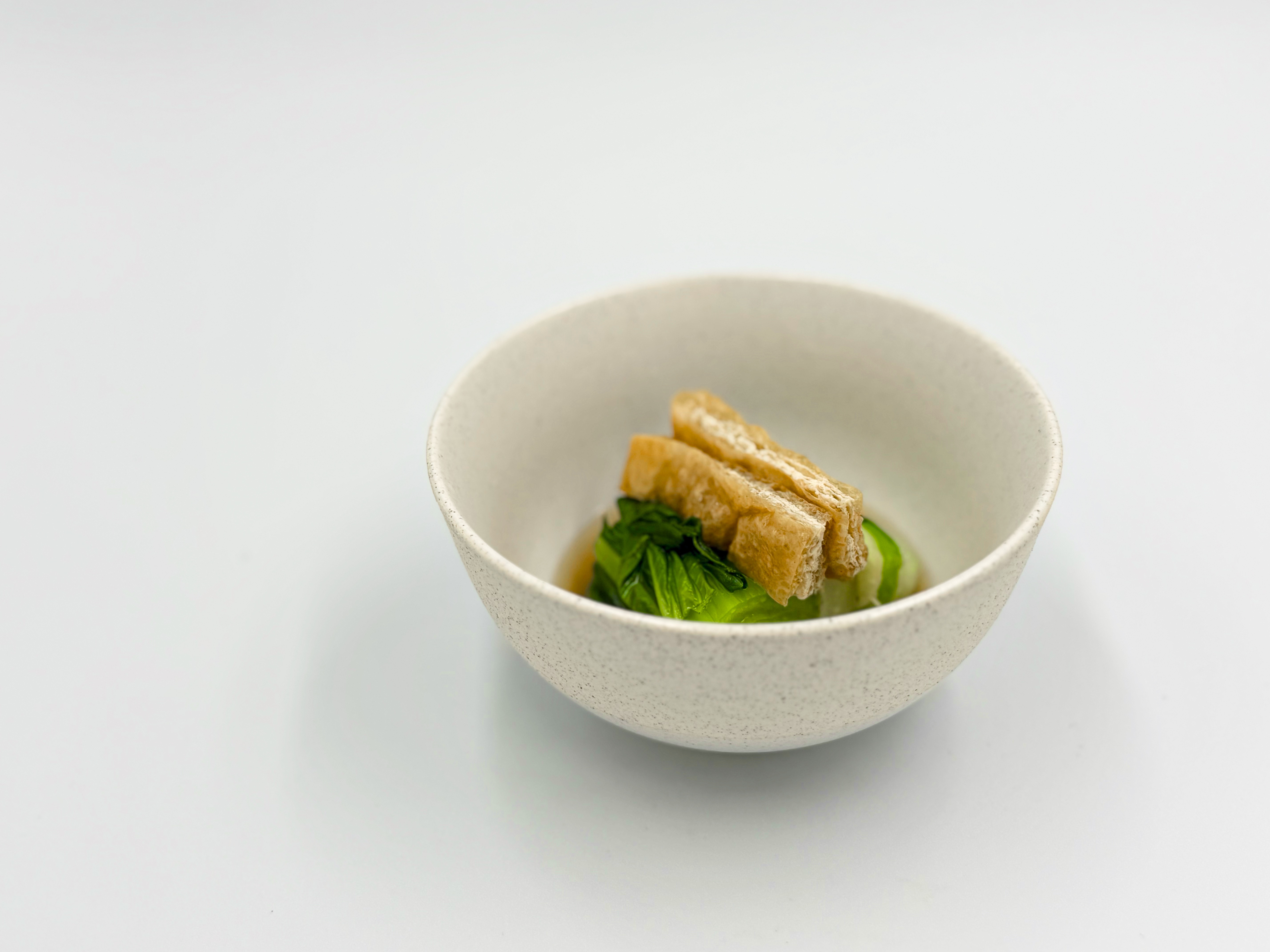
Winter Greens & Abura-age Ohitashi・青梗菜と油揚げのお浸し
Eiten

Servings :
2 x 100 grams
Calories:
50
Prep Time
5 min
Active Cook Time
10min
Passive Cook Time
60 min
Total Time
75 min


Comments