
Fuyu Persimmon with Sesame Cream
- Eiten

- Nov 6, 2025
- 2 min read
Kaki to Nerigoma Kurīmu・柿と練り胡麻のクリーム
As autumn deepens and the first frosts arrive, the persimmon tree offers its final gift before winter's rest. The fuyu persimmon hangs like a small lantern, glowing orange against bare branches A moment of brilliance before everything goes dormant.
This recipe for Fuyu Persimmon with Sesame Cream honors the Japanese principle of kisetsukan (季節感), living in harmony with the natural rhythm and cycle of the seasons. The fuyu persimmon appears precisely when our bodies need its nourishment most: as temperatures drop and daylight shortens, this fruit delivers immune-supporting vitamin C, eye-protecting vitamin A, and warming natural sugars that sustain us through colder months.
This dessert requires little effort: slice the persimmon mindfully, prepare the cream with attention, arrange with care. Yet in its simplicity lies depth. Each slice reveals the fruit's black-brown speckled flesh, its geometry an invitation to notice what we often consume without seeing.
When you set the plate down and prepare to eat this dish, pause. Notice the color of the fine threads of the skin garnishing the top—that impossible orange that exists nowhere else in nature. Observe how the lightly toasted sesame cream pools beside the dark flesh of the fruit, yin and yang in edible form. Then, with gratitude for the tree that bore this fruit and the hands that tended it, receive it: itadakimasu.
Kuroama Fuyu Persimmon from Wakayama
Unlike the astringent hachiya variety, fuyu persimmons are eaten firm and crisp, their texture reminiscent of apple yet more delicate. The sweetness is gentle, almost honeyed, with subtle notes of apricot and date. Paired with rich sesame cream—goma (胡麻), a cornerstone of temple cuisine—the dish achieves chōwa (調和), a harmonious balance, via an unusual pairing.
The type of persimmon that I am using is exclusive to Wakayama prefecture in Western Japan cultivated for sweetness. It's name, kuroama, refers to the speckled appearance of the flesh, which looks similar to black flax or black sesame. I found out the last bit after I had already created the dish. I wish I could say it was intentional, but it was simply happenstance.
The Sacred Role of Sesame in Temple Cuisine
Goma (胡麻, sesame) holds a place of profound importance in Buddhist temple kitchens, where it has been ground into paste and toasted into oil for almost a millennium. The labor of grinding sesame seeds in a suribachi (擂り鉢, grooved mortar) is itself a meditation, requiring patience and presence as the seeds slowly release their oil and transform into smooth paste.
Sesame arrived in Japan from China over 1,300 years ago and quickly became essential to shōjin ryōri, particularly in Zen temple cuisine. Its rich, nutty flavor provides umami depth without animal products, while its creamy texture—when finely ground—offers satisfaction that makes simpler, plant-based meals feel complete.
From a nutritional perspective, sesame is remarkable: these tiny seeds contain more calcium per gram than milk, provide heart-healthy monounsaturated fats, and deliver significant amounts of iron, magnesium, and B vitamins. The lignans in sesame (particularly sesamin and sesamolin) have been studied for their antioxidant properties and potential to support liver health.

1
Substitutions
This recipe was inspired by one that I saw in Kajitsu: A Shojin Restaurant's Season in the City (FUKA Honten, 2020). The original uses figs. In both cases the fruit used has a soft texture and pronounced sweetness. I think that as long as you keep the juxtaposition of the sweetness and the earthy nuttiness of the sesame in tact, you can't go wrong. Experiement with different fruits as the seasons pass.
2
Selecting Ripe Fuyu Persimmons
The fruit should have a deep, vibrant orange skin that is blemish free for the most part. When gently squeezed with your fingers, it should yield slightly to the pressure. If you buy underripe persimmons, set them on the kitchen counter for a couple of days to ripen.
Notes


1
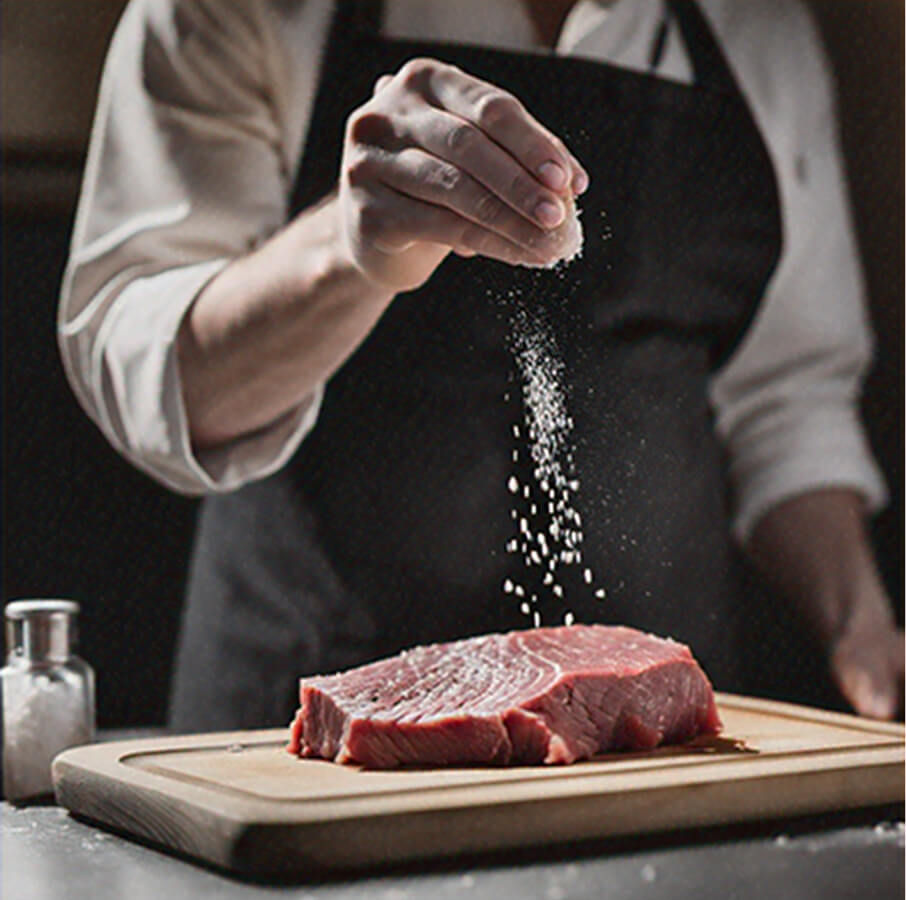
MAKING THE SESAME CREAM. Combine the sesame paste, sugar, kombu, and soy sauce. Whisk until homogeneous. Chill the sauce in the refrigerator for an hour.
2
PREPARING THE PERSIMMON. Use your fingers to gently twist the leaves and stem end. When it feels loose, continue twisting and pull it straight out to remove it. Place the persimmon top side down and cut it in half, then cut each half into quarters. Use a sharp knife to cut the fruit away from the skin. Remove the hard center from each piece, and arrange the pieces equally on two serving plates. Chill for 30 minutes before serving.
3
HOW TO SERVE. Remove the sauce and plates of fruit from the refrigerator. Spoon some of the sauce over each plate of fruit. Thinly slice the reserved skin and twist it into small piles to place on top of each plate as a garnish. Serve.
Instructions
1 ea Fuyu persimmon
20 grams Toasted sesame paste
90 grams Sugar
10 grams Kombu dashi
10 grams Soy sauce
For the Sesame Cream
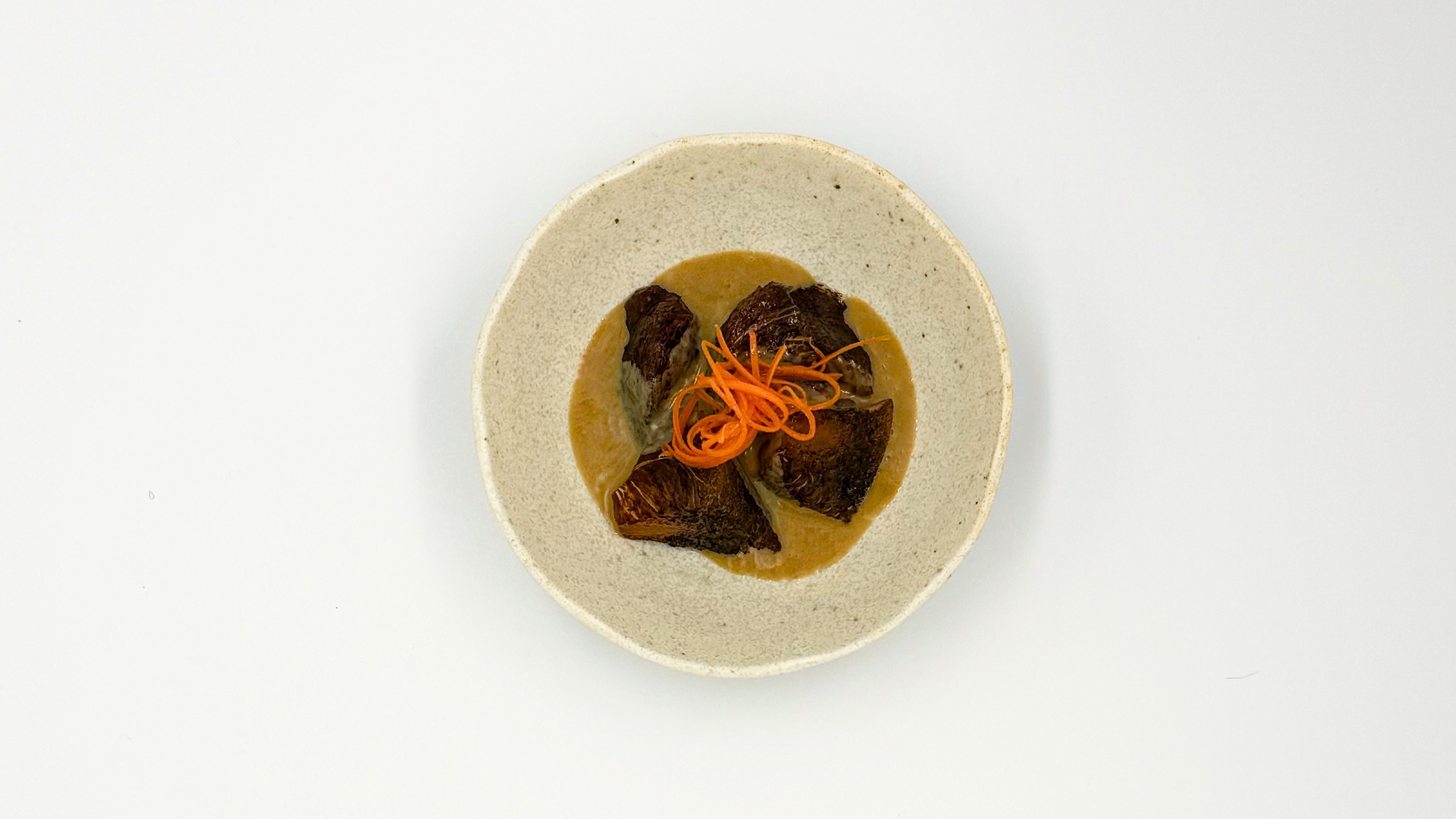
Fuyu Persimmon with Sesame Cream・柿と練り胡麻のクリーム
Eiten

Fuyu persimmons are rich in vitamins A and C, fiber, and antioxidants, while sesame seeds provide healthy fats, calcium, and plant-based protein. This recipe honors the shōjin ryōri principle of letting wholesome ingredients shine in their natural state—no cooking, no complicated techniques, just pure, mindful preparation.
Servings :
2
Calories:
90
Prep Time
15 min
Active Cook Time
0 min
Passive Cook Time
0 min
Total Time
15 min


Comments